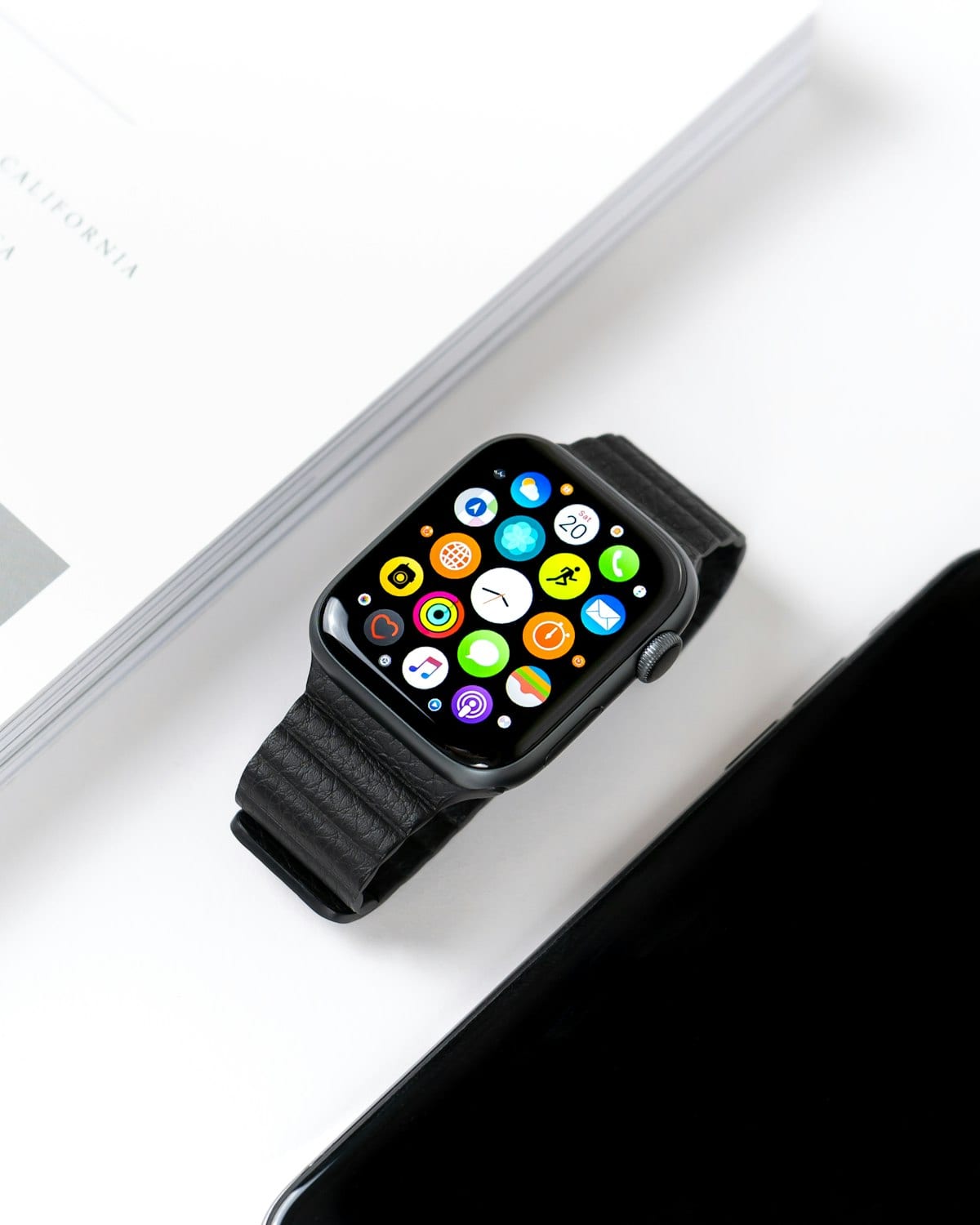
TL;DR: Meta filed a patent in December 2025 for a wearable that listens to its wearer all day, infers emotion from speech, sighs, and laughter, and tries to correlate mood with the time the user takes medication. The patent was published July 2, 2026, and was first flagged by the Patentlyze Substack. Meta told 404 Media the filing is routine and does not mean the company will build the device. The application sits squarely in the same biometric-surveillance lane as Meta’s smart-glasses facial-recognition fight, and it is the most concrete 48-hour datapoint yet for always-on consumer audio capture.
What the Filing Actually Says
Meta submitted the application in December 2025. The U.S. patent office published it on July 2, 2026. The Patentlyze newsletter was first to flag it [1].
The patent describes an “apparatus” that “surveilled a user and their surroundings constantly to craft a better workout” [1]. The stated use case is fitness coaching. The actual sensor scope is far broader.
The wearable would transcribe ambient audio and feed it into an “emotional-state machine learning model” that would “interpret verbal and nonverbal cues to determine emotional indicators” [1]. The patent defines the listening target explicitly: “The AI assistant may listen to a user(s) at predefined times to hear various types of communication, such as sighs, laughter, and/or the tone(s) of a voice(s)” [1]. It also calls for capturing “speech (e.g., voice data), sighs, laughter, or other nonverbal sounds associated with an expression(s), an emotion(s), or ideas” [1].
Those captures would be tagged with “contextual factors such as time of day, location, user activity, or digital interaction” [1]. Training data, the filing says, would include “attributes of thousands of objects” such as a user’s “books, personal messages, and newspapers” [1].
The Medication Loop
The single most invasive sentence in the filing is a one-line example of how the emotion model would be used: the system could associate “a happier emotional state associated with a particular time of day or at a time when medication is taken, etc.” [1]
That phrasing fuses two data streams that U.S. health-privacy law treats very differently. Emotional state inferred from audio is biometric data. Whether a user took a scheduled medication, on time, is protected health information the moment it touches a covered entity. A consumer wearable that builds either stream, let alone links them, is operating in a regulatory no-man’s-land between HIPAA-covered medicine and FTC-covered consumer electronics.
Meta’s framing in the patent is that personal trainers lack the precision to correct form, posture, and movement, and that a single device is needed to “observe movement, recommend routines, and provide corrective guidance” [1]. The fitness justification does not explain why the device also has to know when a pill goes down.
The output the patent describes is not a workout score. It is, in the patent’s own words, a user-facing emotional summary: “An implementation may show that the user laughs more often on certain days, shows improved mood after life events, or expresses more positive emotion during morning routines” [1]. The system would also “provide citations to specific audio moments that support the emotional interpretation” [1]. In other words, it would record you, transcribe you, judge you, and play the clip back.
Meta’s Response
A Meta spokesperson gave 404 Media the standard patent-troll defense: “Like other companies, patents at Meta are often filed to disclose concepts that may or may not be implemented, and a granted patent does not guarantee that Meta has pursued or will pursue the technology described” [1].
That is technically true. It is also the same line Meta has used on every smart-glasses facial-recognition filing that has come under public pressure [2]. The pattern matters: filing a patent is a public claim of inventorship, and Meta’s own behavior, from the 2012 emotional-contagion study to its current smart-glasses push, is what readers should weigh against the corporate boilerplate [3].
Why This Filing Matters Now
Two things make this patent different from the dozens of speculative filings that wash through the patent office every week.
First, the listening scope is the device’s reason for existing. The filing does not describe a fitness tracker that happens to record audio. It describes a fitness tracker whose entire sensing surface is the user’s voice, sighs, laughter, and the room around them, all day. The microphone is the sensor; the workout is the story [1].
Second, Meta is not a neutral patent holder here. The company already runs the largest social-media audio dataset in private hands. It already markets smart glasses with embedded cameras. Sixty-four civil-society organizations, led by the ACLU, have formally asked Meta not to add facial recognition to those glasses [2]. Senators Markey, Wyden, and Merkley have written to the company with the same request [4]. The Texas attorney general has opened an investigation [5]. Adding “we also want to record your sighs and tell you when you took your meds” to that product pipeline is not a neutral move.
In 2012, then-named Facebook ran the now-infamous emotional-contagion study, in which it “altered the feeds of 700,000 users to see if it could make them happy or sad just by tweaking what they saw online” [1]. Users were not told they were part of that experiment. The 2012 study is the historical baseline. The 2026 patent is the next step: passive, continuous, biometric, and aimed at a single human rather than a feed.
The legal exposure is also different this time. A wearable that infers emotion from voice and exports that inference to the cloud is squarely a biometric-data processor under a growing list of state privacy laws, including the Illinois Biometric Information Privacy Act (BIPA) and the California Consumer Privacy Act’s sensitive-personal-information rules. The medication link is the trigger that pulls the device into HIPAA-adjacent territory, because a device that records “time of medication” is also recording “type of medication,” which is a diagnosis vector.
What to Watch
Whether the patent ever grants. Many Meta filings of this kind are abandoned before grant. The grant date, not the publication date, is what fixes Meta’s exclusive rights [1].
Whether Patentlyze publishes the patent number. 404 Media’s report does not name the application number, and the public USPTO record was not searchable through the article’s link. Without a number, civil-society groups cannot file formal opposition or prior-art challenges.
Whether the smart-glasses fight expands to audio. The 64-organization coalition opposing facial recognition on Ray-Bans is the natural coalition to oppose this patent. If ACLU, EFF, or Fight for the Future formally oppose this filing, the story moves from patent-page curiosity to congressional-hearing territory.
Whether Meta ships it. If Meta does ship the device, expect a class-action under BIPA and CCPA within 90 days of launch, on the same playbook as the Meta Ray-Ban facial-recognition class action already pending [6].
Sources
- 404 Media: “Meta Patents AI Device That Tracks Your Emotions, Watches You Take Your Meds” (Jul 8, 2026)
- State of Surveillance: “64 Organizations Tell Congress: Block Meta’s Facial Recognition Glasses”
- State of Surveillance: “EFF Sues Meta Over Ray-Ban Facial Recognition Code”
- State of Surveillance: “Senators Urge Meta to Halt Smart Glasses Facial Recognition”
- State of Surveillance: “Texas AG Paxton Opens Meta Ray-Ban Glasses Investigation”
- State of Surveillance: “Meta Ray-Ban Smart Glasses Class Action”