TL;DR:
- What happened: Hackers breached NYC Health + Hospitals (the largest public healthcare system in the United States) through an unnamed third-party vendor. They had access from November 25, 2025 to February 11, 2026. Eleven weeks inside, copying everything. [1][2]
- What was stolen: Fingerprints. Palm prints. Social Security numbers. Medical records including diagnoses, medications, and test results. Health insurance data. Billing records. Passport and driver’s license scans. Precise geolocation data from uploaded document photos. [1][2][3]
- Who’s affected: 1.8 million people, patients and employees. NYC H+H primarily serves uninsured New Yorkers and Medicaid recipients, making this a breach that disproportionately hits people who can least afford it. [1][4]
- Why it’s different: You can change a password. You can freeze your credit. You cannot change your fingerprints. Biometric data is permanent. Once it’s stolen, it’s compromised forever. [2][3]
- What’s being done: NYC H+H is offering 24 months of Kroll credit monitoring. A class action lawsuit has been filed in the Southern District of New York. Multiple law firms are investigating additional claims. [4][5]
Eleven Weeks. Nobody Noticed.
On February 2, 2026, someone at NYC Health + Hospitals finally spotted suspicious activity on the network. By then, the attackers had been inside for 69 days. [1][2]
The breach started November 25, 2025, the day before Thanksgiving. Whether that timing was deliberate or coincidental, it gave the attackers the holiday skeleton-crew advantage. They didn’t just poke around. They copied files. Patient records. Employee data. Biometric scans. Government-issued IDs. For eleven straight weeks.
NYC H+H detected the breach on February 2 but didn’t fully lock the attackers out until February 11, nine more days of access after discovery. [2][3] They reported the breach to the U.S. Department of Health and Human Services on March 24, 2026, nearly two months after detection. [4] Public disclosure didn’t come until May 18. [1]
That’s a timeline worth repeating: breach starts in November, detected in February, reported in March, disclosed in May. Six months from intrusion to the public finding out their fingerprints were stolen.
The Fingerprint Problem
Every data breach story sounds the same after a while. SSNs stolen. Credit monitoring offered. Move along. But this one is different, and the difference is permanent.
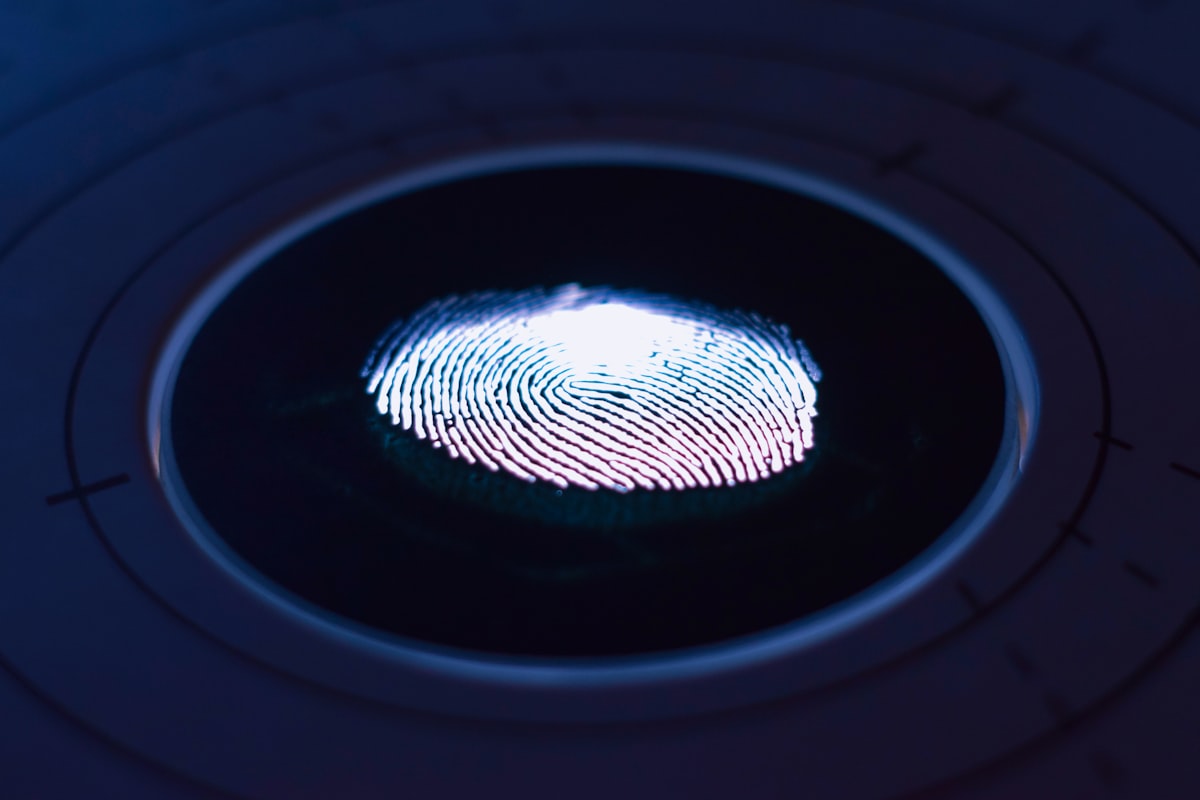
The hackers got fingerprints and palm prints. [1][2][3]
When your password gets stolen, you change it. When your credit card number leaks, you get a new card. When your Social Security number is compromised, you can freeze your credit, set fraud alerts, and monitor for misuse. These are recoverable events. Annoying, expensive, stressful, but recoverable.
Fingerprints don’t work that way. You have ten of them. They don’t change. They can’t be revoked, reissued, or reset. Every system that uses your fingerprint for authentication (your phone, your workplace, your bank, potentially your government ID) now relies on a credential that someone else has a copy of. [2][3]
As Malwarebytes put it: biometrics “tend to stay with you for life” and “are not easy to erase or replace.” Once compromised, large biometric databases become “long-term liabilities for everyone who relies on them as trustworthy identifiers.” [2]
Kroll credit monitoring doesn’t help here. There is no fingerprint monitoring service. There is no “biometric freeze” you can place. The breach is, in the most literal sense, irreversible.
Why Did a Hospital Have Your Fingerprints?
This is a question NYC H+H hasn’t fully answered.
Employee fingerprints make some sense: background checks for healthcare workers typically require fingerprint submission. But the breach notification says “fingerprints and palm prints” were among the stolen data, and the affected population includes both patients and employees. NYC H+H hasn’t clarified whether patient biometrics were collected, or only workforce data. [3]
Biometric Update raised the unresolved questions directly: “why and how biometric information was stored, which individuals’ biometrics were included, and whether the data belonged only to workforce members, prospective employees, or also patients.” [3]
The fact that a healthcare system was sitting on a database containing biometric data for potentially 1.8 million people (and that we don’t know exactly why) is itself a story. Healthcare organizations have been expanding their data collection far beyond medical necessity. Patient identity verification, time-and-attendance tracking, access control. Every additional data type they collect is another liability when the inevitable breach happens.
And in healthcare, breaches are always inevitable. The sector is the most targeted industry for cyberattacks, and third-party vendor compromises are the most common entry point. [3]
The Unnamed Vendor
NYC H+H says the attackers got in through a breach at a third-party vendor. They won’t say which one. [1][2]
This is now a pattern so predictable it barely qualifies as news. A healthcare provider outsources some function (billing, records management, IT services) to a vendor. The vendor gets hacked. The healthcare provider’s patients pay the price. The vendor’s name stays out of the headlines.
Biometric Update called third-party access “one of the most persistent vulnerabilities in the healthcare sector.” [3] That’s generous. It’s not a vulnerability. It’s a business model. Healthcare systems hand sensitive data to outside companies, those companies get breached, and patients get a letter offering free credit monitoring.
The vendor anonymity is particularly galling. NYC H+H is a public institution. The people it serves (largely uninsured New Yorkers and Medicaid recipients) didn’t choose which vendors would handle their data. They didn’t consent to their fingerprints being stored in a system accessible to unnamed third parties. And now they don’t even get to know who lost their data.
The Geolocation Detail Nobody’s Talking About
“Precise geolocation data” was among the stolen information. That detail has gotten less attention than the fingerprints, but it deserves more. [1]
TechCrunch reported that the geolocation data likely came from photos of identity documents uploaded by patients: passport scans, driver’s license photos. Modern phones embed GPS coordinates in every photo by default. When patients photographed their IDs and uploaded them, those photos carried metadata showing exactly where the person was standing when they took the picture. [1]
So the stolen data doesn’t just include what your documents say. It includes where you were when you photographed them. For many people, that’s their home address, rendered down to GPS precision.
Combined with the medical records, insurance data, and biometric information, this breach gives attackers a uniquely complete profile: who you are, what you look like biometrically, where you live, what conditions you have, and how you pay for healthcare. That’s not identity theft material. That’s a dossier.
The Legal Fallout
On May 20, 2026, former patient Deneice O’Connor filed a proposed class action lawsuit against NYC Health + Hospitals in the U.S. District Court for the Southern District of New York. [5]
The complaint alleges NYC H+H “breached its duties to implement reasonable and adequate data-security measures and provide timely notice of the breach.” The claims invoke common law, contract law, industry standards, the Federal Trade Commission Act, and HIPAA. [5]
At least three additional law firms (Edelson Lechtzin LLP, Shamis & Gentile P.A., and Levi & Korsinsky, LLP) have announced investigations into the breach. [6][7] More will follow. When 1.8 million people lose their biometric data through a public hospital system, the legal industry pays attention.
The biometric angle adds a dimension these lawsuits don’t usually have. Stolen SSNs lead to quantifiable financial harm. Stolen fingerprints lead to permanent identity compromise that’s harder to put a dollar figure on, which could make damages arguments either harder or much, much larger.
What You Should Do If You’re Affected
NYC H+H is offering 24 months of credit monitoring through Kroll. Take it. It won’t protect your biometric data, but it will flag financial fraud.
- Freeze your credit at all three bureaus (Equifax, Experian, TransUnion). Don’t just set an alert. Freeze it. It’s free and it blocks new accounts from being opened in your name.
- Monitor your medical records. Request your records from NYC H+H and check for services you didn’t receive. Medical identity theft (someone using your insurance to get treatment) is harder to detect and harder to fix than financial fraud.
- Disable fingerprint login on financial apps if your prints were compromised. Switch to a strong alphanumeric passcode instead. Biometric authentication is only as secure as the biometric data behind it.
- Check your phone’s photo metadata settings. Turn off location tagging for document photos. On iPhone: Settings → Privacy & Security → Location Services → Camera → Never. On Android: Open Camera app → Settings → Location tags → Off.
- File a complaint with HHS if you believe your protected health information was mishandled. The Office for Civil Rights investigates HIPAA violations. File here.
- Consider joining the class action. Multiple law firms are accepting affected individuals. The lawsuit is in its early stages.
The Bigger Problem
This breach is a case study in everything wrong with how healthcare handles biometric data.
Organizations collect it because they can. Background checks, identity verification, access control: there’s always a reason. But the question nobody asks until after the breach is: did we need to store this permanently? Did we need to keep fingerprint scans on a network accessible to third-party vendors? Did we need 1.8 million people’s biometric identifiers sitting in a system that went 69 days before anyone noticed an intruder?
Healthcare breaches aren’t slowing down. They’re accelerating. In May 2026 alone, at least nine HIPAA-regulated entities reported significant breaches. [8] Erie Family Health Centers lost data on 570,000 people. Florida Physician Specialists exposed 276,000 records. [3] The healthcare industry is under siege, and it’s still collecting more data than it can protect.
Biometric data makes every breach permanent. A password breach is a Tuesday. A fingerprint breach is forever.
And NYC Health + Hospitals still won’t name the vendor that let the attackers in.
Earlier Coverage
We first covered this breach in March 2026 when the initial scope was reported at over 1 million affected individuals. Read our earlier article: NYC Health + Hospitals Breach: 1 Million Patients Exposed in 11-Week Hack. Since then, the affected count has risen to 1.8 million, the biometric data theft has been confirmed, and the first class action lawsuit has been filed.
Sources
- TechCrunch: NYC Health + Hospitals Says Hackers Stole Medical Data and Fingerprints (May 2026)
- Malwarebytes: Biometrics, Diagnoses, and Bank Details Exposed in Major Healthcare Breach (May 2026)
- Biometric Update: Data Breach Exposes Medical, Financial, Biometric Data of 1.8 Million (May 2026)
- NYC Health + Hospitals: Official Notice of Data Breach (2026)
- Bloomberg Law: NYC Public Hospitals Sued Over Hack Affecting 1.8 Million People (May 2026)
- PR Newswire: Edelson Lechtzin LLP Investigates NYC H+H Data Breach (March 2026)
- Schubert Jonckheer & Kolbe: NYC Health + Hospitals Under Investigation (2026)
- HIPAA Journal: May 2026 Data Breach Round Up (May 2026)