TL;DR:
- The money: The White House approved a secret $9 billion funding request to buy Nvidia Grace Blackwell AI chips for the NSA, CIA, and other intelligence agencies. An additional $800 million is being immediately reprogrammed from other budgets. [1][2]
- The contradiction: White House Chief of Staff Susie Wiles quietly authorized the NSA to keep using Anthropic’s Claude Mythos model, the same company the Pentagon blacklisted as a “supply chain threat” in February 2026. [3][4][5]
- The deal: Anthropic and the government are finalizing a classified contract giving spy agencies continued access to Claude Mythos. It includes a “carve-out” preventing use on Americans’ data, though who enforces that remains unclear. [1][3][6]
- The turf war: The Pentagon wanted Anthropic gone. The intelligence community said there’s no alternative. A cancelled executive order that would have given the NSA power over AI evaluations collapsed after last-minute lobbying from Zuckerberg, Musk, and David Sacks. [7][8]
- Why it matters: America’s spy agencies are building massive AI infrastructure with almost no public oversight. The “privacy carve-out” for American data has no enforcement mechanism anyone will describe on the record.
$9 Billion for Chips Nobody Can See
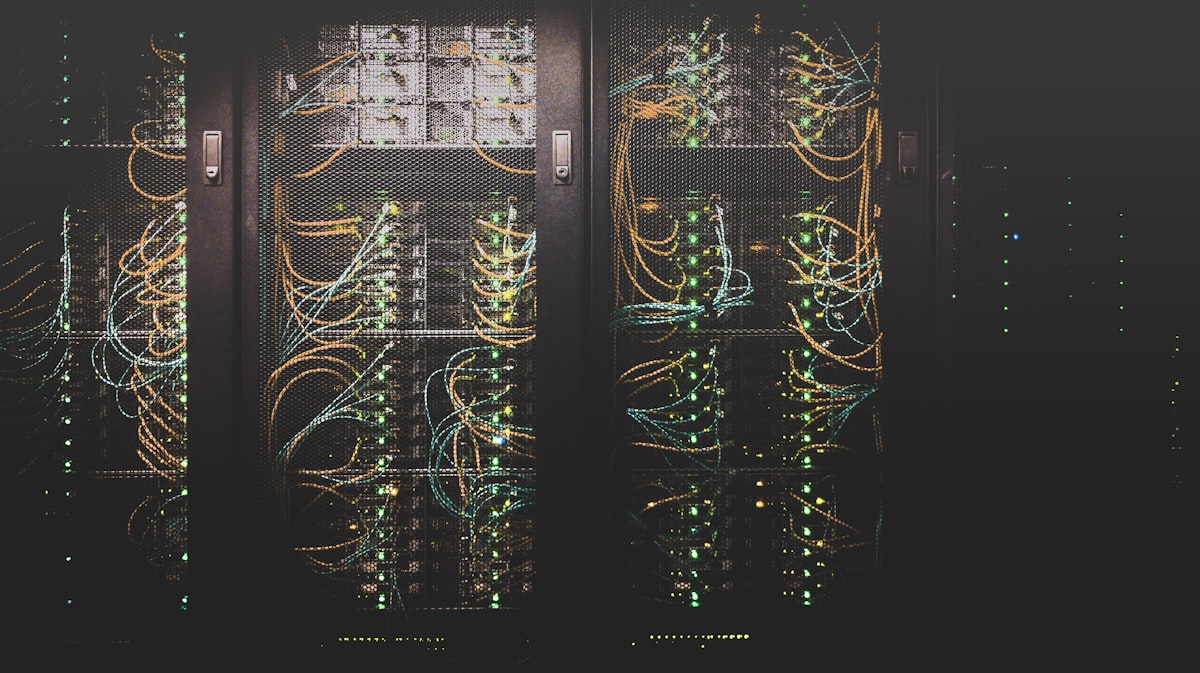
The CIA and NSA can’t run the latest AI models. That’s the pitch. The classified networks that America’s spy agencies operate on (air-gapped, compartmentalized, built for a pre-AI era) don’t have the hardware to run frontier models like ChatGPT or Claude Mythos. They need Nvidia’s Grace Blackwell superchip, which requires specialized data centers with massive electrical capacity and liquid cooling systems. [1][2]
“Our intelligence community needs the frontier, the best AI chips, models, systems, talent, on a timeline that matches the threat,” said Vinh Nguyen, former NSA chief data scientist. [1]
So the White House said yes to $9 billion. Congress still needs to approve it, but the administration isn’t waiting: they’ve already reprogrammed $800 million from other budgets for “rapid acquisition” of computing capacity. [1][2]
What does $9 billion buy? Classified data centers. Custom-built Nvidia infrastructure. The ability to run frontier AI models on networks that hold America’s most sensitive intelligence. And if you’re wondering what spy agencies plan to do with that power (sifting through massive volumes of intercepted communications, running autonomous analysis on satellite imagery, identifying patterns across billions of data points) nobody’s required to tell you.
Blacklisted by the Pentagon. Hired by the NSA.
In February 2026, President Trump directed all federal agencies to stop using Anthropic’s AI technology. Defense Secretary Pete Hegseth designated the company a “supply chain risk,” a label previously reserved for companies linked to foreign adversaries like Huawei and Kaspersky. [4][5]
The reason? Anthropic refused to let the military use Claude for “all lawful purposes,” including autonomous weapons and mass surveillance. The company pushed back on terms that would have removed restrictions on how its models could be deployed. The Pentagon’s response was to blacklist them. [4][5]
Three months later, the White House went around the Pentagon entirely.
Susie Wiles, White House Chief of Staff, authorized the NSA to continue using Anthropic’s Claude Mythos, the company’s most advanced model, released in April 2026. The justification: there is no alternative. The chip shortage means classified networks can barely run frontier models at all, and Claude Mythos is reportedly optimized to function on previous-generation processors that the agencies actually have. [3][6]
Read that again: the Pentagon says Anthropic is a national security threat. The NSA says they can’t do their job without Anthropic. The White House sided with the spies.
The Classified Contract Nobody Will Describe
Anthropic and the government are “finalizing” a classified agreement for continued NSA access to Claude Mythos. Here’s what’s been reported about the terms: [1][3][6]
- The contract includes a restriction preventing deployment of the AI on Americans’ data
- It does not include the broad “any lawful use” authority the Pentagon originally demanded
- Wiles views the arrangement as a potential model for other AI companies working with intelligence agencies
- The deal covers intelligence analysis, cybersecurity, and military support applications
The “carve-out” for Americans’ data sounds reassuring until you ask basic questions. Who decides what counts as “Americans’ data” on a classified network processing global signals intelligence? Who audits compliance? What happens when an American’s communication gets swept up in a foreign target’s intercept, the exact scenario that makes FISA Section 702 so controversial?
Nobody will answer these questions on the record. The contract is classified. The oversight is classified. The enforcement mechanism, if one exists, is classified.
The Cancelled Executive Order
This fight didn’t happen in a vacuum. On May 21, 2026, Trump was scheduled to sign an executive order on AI that would have given the NSA power to conduct classified evaluations of frontier models before public release. The Commerce Department’s NIST and its AI safety institute would have helped define which models fell inside the perimeter. [7][8]
Trump pulled the order at the last minute. “I didn’t like certain aspects of it,” he said. [7]
What actually happened: between Wednesday night and Thursday morning, Mark Zuckerberg, Elon Musk, and David Sacks each called the President. By morning, the signing ceremony was cancelled. [8]
The turf war underneath is significant. The intelligence community wanted authority over AI model evaluation, the power to see what’s inside these models before anyone else. The Commerce Department wanted that authority for civilian agencies. Tech executives wanted nobody to have it. The executives won. [7][8]
So here’s where we are: spy agencies get $9 billion for AI infrastructure, a classified contract with Anthropic, and no executive order establishing any oversight framework for how they use frontier models. The guardrails that were supposed to come first got killed by a few phone calls.
What Mythos Actually Does
Anthropic’s Claude Mythos isn’t just another chatbot. Through the company’s Project Glasswing program, 50 select partners get access to the model for vulnerability discovery. In one month, the program identified more than 10,000 critical security flaws. [6]
Now imagine that capability running on the NSA’s classified networks, pointed at foreign intelligence targets. Or pointed at the communications infrastructure of adversary nations. Or, despite the “carve-out,” processing the incidental collection of Americans’ data that flows through signals intelligence programs every day.
The intelligence community’s argument for AI is legitimate: sifting through the volume of intercepted communications manually is impossible. AI can find patterns humans miss. But the history of surveillance technology is a history of scope creep. Tools built for foreign intelligence end up pointed inward. Every. Single. Time.
We’ve covered the Pentagon’s AI partnerships before. This story is the next chapter: the intelligence community going around the Pentagon to get what it wants, with the White House as willing accomplice.
What Happens Next
Three things to watch:
Congressional funding vote. The $9 billion needs approval. Some lawmakers may demand transparency about how AI will be deployed on classified networks. Others will rubber-stamp it as a national security necessity. The $800 million already reprogrammed doesn’t need congressional approval; that money is already moving.
FISA Section 702 reauthorization. The Senate is currently debating whether to renew the surveillance authority that allows warrantless collection of foreign targets’ communications, which inevitably sweeps up Americans’ data. Adding frontier AI processing to that pipeline makes the privacy stakes exponentially higher.
The Anthropic contract terms. When this classified contract is eventually leaked (and it will be) the details of the “carve-out” for Americans’ data will tell us whether it’s a real protection or a fig leaf. Based on the history of intelligence community “minimization procedures,” don’t bet on the former.
What You Can Do
- Use end-to-end encrypted communications. Signal, not SMS. If AI is processing intercepted communications at scale, encryption is the only technical barrier that matters.
- Support FISA reform organizations. The EFF, ACLU, and Brennan Center are fighting for warrant requirements on Americans’ data in Section 702 collection. That fight just got more urgent.
- Contact your representatives about the $9 billion request. Congressional approval is still required. Ask what oversight mechanisms will exist for AI deployment on classified networks.
- Follow the money. $9 billion in AI infrastructure spending will create new contracts, new data centers, and new surveillance capabilities. Public procurement records, where they exist, are worth watching.
Sources
- Philadelphia Inquirer: White House Approves $9B for Spy Agencies to Catch Up on AI (May 23, 2026)
- Crypto Briefing: White House Approves $9B for US Spy Agencies’ AI Adoption (May 23, 2026)
- CXO Today: White House’s Secret Deal with Anthropic for Spy Work (May 2026)
- NBC News: Anthropic Says the Pentagon Has Declared It a National Security Risk (March 2026)
- Mayer Brown: Pentagon Designates Anthropic a Supply Chain Risk (March 2026)
- The Next Web: The US Blacklisted Anthropic as a Security Threat. Its Spy Agencies Are Using Claude Anyway (May 24, 2026)
- CNBC: Trump Postpones AI Executive Order Signing (May 21, 2026)
- Washington Post: Last-Minute Lobbying by Tech Industry Officials Led Trump to Cancel AI Order (May 22, 2026)