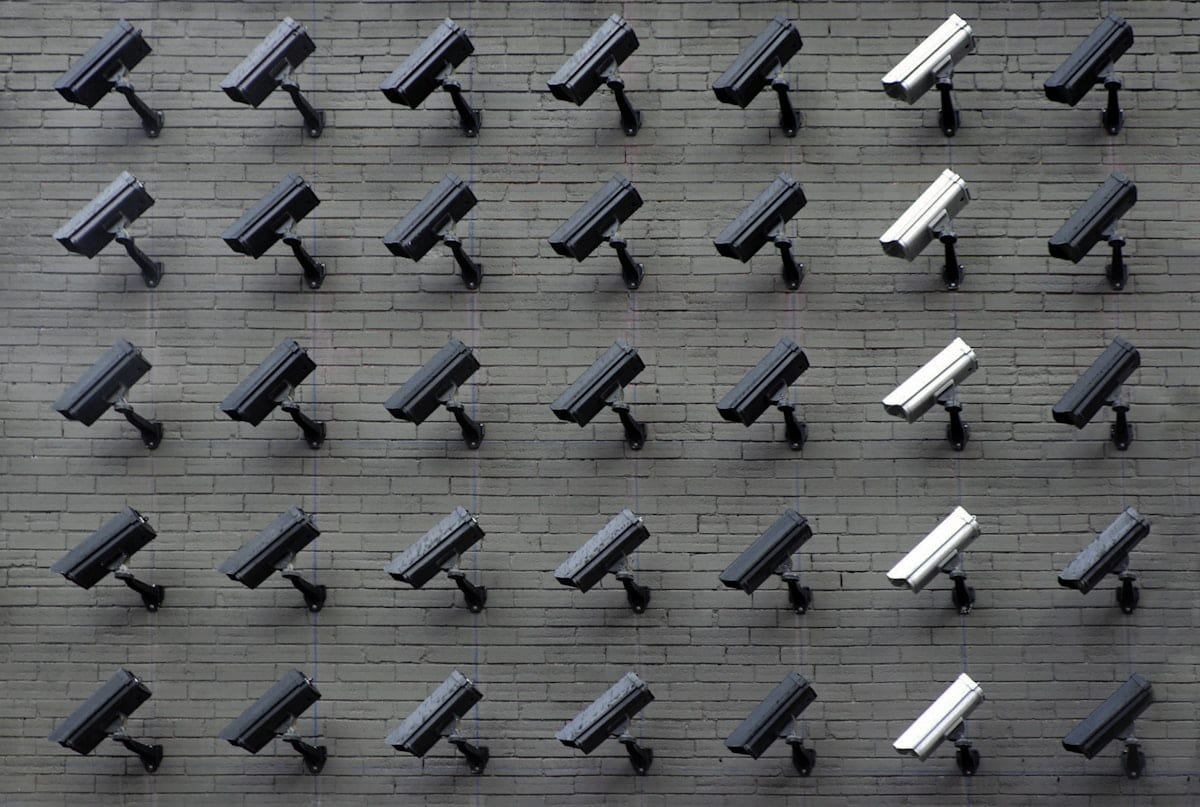
TL;DR: On June 12, 2026 the Maui County Council approved a $1.7 million expansion of Maui Police Department technology that Police Chief John Pelletier describes as "complete real-time coverage of Maui island," including AI-assisted cameras, Brinc drones, and a central real-time operations center.[1] Pelletier tied the approval to the response failures during the August 2023 Lahaina wildfire, and pitched the system as a public-safety tool that watches for "anomalies" (smoke, crime, license plates) across the island in real time.[1] ACLU Hawaii called the approval "several serious civil rights concerns" in a statement to Hawaii News Now, naming the integration with private security systems and the data feeding the AI's anomaly detection as the two specific gaps the public has not been told about.[1] The vote passed after a council member asked about drug dealing at a local park; the cost was approved without a public hearing on the data, the training sets, or the rules the AI will follow.[1] The Maui deployment is the most recent example of a US local-government body writing a seven-figure check for a "real-time crime center" that no statewide law currently constrains.
What Maui Just Approved
The Maui County Council voted on June 12, 2026 to fund a $1.7 million expansion of the Maui Police Department's surveillance stack.[1] The vote followed a presentation by Maui Police Chief John Pelletier, who has been the public face of the program since the Lahaina response. The package includes: AI-assisted cameras deployed across the island, a fleet of drones from the company Brinc, integration with private residential and commercial security systems, and a central "real-time operations center" where every feed will be watched simultaneously.[1]
Pelletier's framing, in the Hawaii News Now report, was direct: "Our personnel can go back and they can look for past events, where there's a crime, they could be looking for things in real time so they can actually see things as they're occurring."[1] That is the same capability real-time crime centers (RTCCs) in cities like Chicago, New York, Detroit, and Atlanta have been building for the last five years. The Maui deployment is the first documented case in Hawaii of a county-level RTCC with island-wide camera coverage and drone support, and it is being paid for entirely with county funds without a state-level statutory framework governing how the AI is used or what data is retained.[1]
The cost was approved in the same council session in which a council member asked about drug dealing at a local park and was told the new camera system would let police "see this occur in real time."[1] (The Hawaii News Now report names Council Member Tom Cook separately as saying the system would help and that "people are asking for security and oversight for their children.") No public hearing on the AI's training data, false-positive rates, or retention rules was held before the vote. The Maui Police Department's published use policy, as of the Hawaii News Now report, does not specify how long video will be retained, who can access the feeds, or what the "anomaly detection" algorithm is trained to flag.[1]
The Brinc Drones and the 1,000-Foot License Plate Read
The drone component is the most technically specific part of the Maui package, and the part most likely to travel to other jurisdictions.[1] The drones will be provided by Brinc Drones, a Seattle-based company that sells tactical drones to police departments nationwide. Brinc's marketing materials, embedded in the Hawaii News Now report, show drones that can respond "minutes after a call" and identify a license plate from a thousand feet in the air, which can then be tracked on Maui's traffic cameras and watched from the operations center.[1]
The "1,000-foot license plate read" is the part the ACLU flagged, and the part most local-government police procurements do not name in public documents. License plate readers (LPRs) on fixed poles are a known quantity, with decades of case law on retention and access. License plate readers mounted on a drone that can be redirected in real time to a specific car, at a specific address, at a specific time, are a different surveillance category. The drone-mounted LPR is the same capability that has driven the Flock Safety cancel wave (see related coverage), the same capability that has triggered BIPA litigation in Illinois, and the same capability that the Maui Police Department's published policy does not currently constrain.[1]
Pelletier's own description of the drone capability: "Imagine you have a police chase, or you have something that's occurring. You can actually have the ability to monitor that in real time over the entire community."[1] That phrasing is the RTCC pitch in plain language. The same system that can monitor a police chase can monitor a protest, a religious gathering, a political canvass, or a journalist's source meeting. The Maui use policy, as published, does not distinguish between those uses.[1]
The Lahaina Wildfire as the Justification
The political hook for the Maui vote is the August 2023 Lahaina wildfire, the deadliest US wildfire in more than a century. The communication failures during the response, including the absence of a unified siren system, the breakdown of emergency-radio coordination, and the lack of real-time situational awareness, have been documented in multiple after-action reports and were the central subject of subsequent Hawaii state inquiries. Pelletier, in the Hawaii News Now report, frames the surveillance expansion as a direct response to those failures.
"That's gonna have AI technology built in there that will search for anomalies. So smoke, coming from the mountain, will be an anomaly," Pelletier said in the report.[1] The same anomaly-detection system that would flag a wildfire on the mountain would, in the same deployment, flag a crowd forming on a sidewalk, a vehicle circling a neighborhood, or any other pattern the algorithm is trained to surface. The Maui Police Department has not published what the algorithm is trained to surface, and the council did not ask before approving the $1.7 million.[1]
The use of the Lahaina response as a political justification for a general-purpose surveillance system is the same rhetorical move the Department of Homeland Security has made repeatedly since 2001, and the same move that produced the PATRIOT Act's expansion of Section 215 surveillance authorities. The framing converts a discrete, well-documented emergency-response failure into a blank check for an unrelated capability, and it is the framing the ACLU Hawaii's statement implicitly pushed back on.[1]
ACLU Hawaii's Pushback: Three Specific Gaps
Wookie Kim of ACLU Hawaii gave Hawaii News Now a three-point statement that is the most specific public pushback the Maui deployment has received.[1] The statement names three concerns: the privacy and abuse risk of integrating police cameras with private residential and commercial security systems; the algorithmic-bias risk of the AI's anomaly detection being trained on data that is itself biased; and the absence of any publicly available guardrails on what the system will be used for.[1]
On the private-security integration, Kim said: "widespread surveillance, especially tied into private businesses or homes, risks privacy and potential abuse."[1] This is the first documented case in Hawaii of a county-level RTCC being designed to ingest private security feeds, and it is the same architectural pattern that has driven the recent wave of state-level ALPR regulation in California, Oregon, Colorado, and Washington. The Maui integration plan is the natural next step in the same trajectory: once police can pull from private cameras, the "private security" boundary becomes the only privacy boundary left, and that boundary is not one the county can enforce.[1]
On the algorithmic-bias risk, Kim said: "These algorithms, right, it all depends on the data that they're fed to be trained on. A lot of that data is flawed, garbage in, garbage out."[1] This is the standing objection the AI ethics community has raised against police predictive-policing systems since the 2016 ProPublica investigation of COMPAS, and the same objection the National Institute of Standards and Technology raised in its 2024 review of facial-recognition accuracy disparities. The Maui Police Department has not published what training data the anomaly-detection algorithm uses, and the council did not ask before approving the $1.7 million.[1]
On the absence of guardrails, Kim said the public needs to know what the rules are, and that Pelletier's "only used for public safety and law enforcement" assurance is not a rule.[1] This is the third gap, and the most procedural: the difference between a policy and a rule is the difference between a press statement and an ordinance. The Maui County Council approved a $1.7 million surveillance system on the strength of an oral assurance, with no ordinance specifying retention, access, audit, or use-case limits.[1]
The National Pattern: City-Level Police AI Investment
The Maui deployment is not an isolated event. It is the most recent entry in a five-year pattern of US local-government bodies writing seven-figure checks for real-time crime centers and AI-assisted surveillance stacks, with no consistent state or federal framework governing how the systems are used. The pattern accelerated in 2024 and 2025, when federal grant programs (the Byrne JAG program, the COPS Hiring Program, and the Smart Policing Initiative, all longstanding US Department of Justice programs) made hundreds of millions of dollars available for exactly this category of equipment.
Three data points anchor the pattern. First, the Georgetown Center on Privacy and Technology's standing "Perpetual Line-Up" report has tracked US police face-recognition deployment since 2016, with subsequent updates documenting expansion into mid-sized police departments and sheriff's offices. Second, the Police Executive Research Forum (PERF) has published research on the spread of real-time crime centers (RTCCs) to mid-size US police departments, with the trend line running from a small handful of large-city deployments in the early 2020s to broader mid-size adoption by mid-decade. Third, the wave of state-level ALPR legislation passed in California, Oregon, Colorado, and Washington since 2024 is the legislative response to the same deployment pattern that is now landing in Maui (the existing SOS coverage of the Flock Safety cancel wave documents the California, Colorado, Illinois, Massachusetts, Oregon, and Washington state responses, with the underlying bills cited inline there).
The Hawaii context adds a state-level dimension. Hawaii is one of a small number of US states with no general biometric-information privacy statute comparable to the Illinois Biometric Information Privacy Act (BIPA), and the Hawaii state Senate has not advanced a 2026 bill to fill the gap in the same legislative window. The Maui County Council's June 12 vote is therefore not just a local procurement; it is the de facto state-level precedent, because there is no state-level law that will catch up with the deployment in the current session. The ACLU Hawaii statement is, in effect, the only procedural check on the rollout that the state legislature has not yet provided.[1]
What It Means for Maui Residents
Three groups are affected, and the consequences diverge.
If you live on Maui and your home or business security system is on the same network as anything the county can reach. The Maui deployment's "integration with private security systems" is the part most residents have not been told about. If your home security camera, ring doorbell, or commercial alarm system is reachable by the Maui Police Department, the RTCC can pull from it. The Hawaii News Now report does not specify whether the integration is opt-in or opt-out, whether the county has the legal authority to compel a private camera to feed the RTCC, or whether the integration requires a warrant.[1] The default posture in similar deployments (Detroit, Atlanta, Chicago) has been warrantless access via voluntary partnership, and the same default is the most likely outcome in Maui absent a county ordinance that constrains it.
If you are a journalist, protester, or organizer who operates on Maui. The RTCC's "complete real-time coverage of Maui island" framing is not a marketing line. It is a description of the system as proposed. The same system that monitors a police chase can monitor a march, a religious gathering, a political canvass, or a confidential source meeting. The Hawaii state shield law for journalists (Hawaii Revised Statutes Chapter 92) does not currently constrain real-time police surveillance of reporters, and the Maui County Council has not adopted an ordinance that would.[1] The risk is not that the system will be used to surveil a protest; the risk is that the system will be used, and that the use will not be recorded in any policy the public can read.[1]
If you are a US local-government policymaker watching Hawaii. The Maui vote is the first documented case of a US county approving a $1.7 million AI-assisted RTCC in 2026 with a wildfire-response justification and no statewide biometric-privacy framework. The same pattern will land in other counties that experienced discrete emergency-response failures (wildfire, hurricane, mass-casualty event) over the next 18 months. The legislative response (BIPA-equivalent state laws, RTCC ordinance templates) is the only procedural check that can match the deployment cadence. The Maui vote is the case study that will be cited in those legislative hearings.
The Bottom Line
On June 12, 2026, the Maui County Council approved a $1.7 million expansion of Maui Police Department technology, including AI-assisted cameras, Brinc drones, and a central real-time operations center, with the stated goal of "complete real-time coverage of Maui island."[1] Police Chief John Pelletier tied the approval to the response failures during the August 2023 Lahaina wildfire and pitched the system as a public-safety tool that watches for "anomalies" in real time.[1] ACLU Hawaii named three specific concerns: the integration with private security systems, the algorithmic-bias risk of the anomaly-detection AI, and the absence of any publicly available guardrails on what the system will be used for.[1]
The cost was approved in a single council session, without a public hearing on the AI's training data, false-positive rates, or retention rules, and on the strength of an oral assurance from the police chief.[1] The Maui deployment is the most recent example of a US local-government body writing a seven-figure check for a "real-time crime center" that no statewide law currently constrains, and the first documented case in Hawaii of a county-level RTCC with island-wide camera coverage and drone support.
Watch for three things over the next 30 days. First, the Maui Police Department's published use policy for the new system, and whether it specifies retention windows, access controls, audit requirements, and the specific uses the anomaly-detection AI is trained to flag. Second, the Hawaii state Senate's 2026 schedule for a biometric-privacy bill, and whether the Maui deployment is cited as the standing case for why a BIPA-equivalent is needed at the state level. Third, the first reported instance of the Maui RTCC being used in a public-safety or law-enforcement investigation, and the procedural record (warrant, policy reference, retention) attached to that use. The answers to those three questions will determine whether the Maui deployment is a one-off or the standing pattern for the next wave of county-level police AI investment.
Sources
- Hawaii News Now: "Maui Council approves $1.7M in AI surveillance tools for police" by Daryl Huff, June 13, 2026 (primary source for the June 12 council vote, the $1.7 million cost, the Brinc drone contract, the Pelletier and Kim quotes, the Lahaina wildfire justification, and the "Eyes in the Sky" framing)
- Georgetown Law Center on Privacy and Technology, "The Perpetual Line-Up: Unregulated Police Face Recognition in America" (PDF report) (the standing reference for US police face-recognition deployment data; the 1-in-4 statistic on departments with access to face recognition is from the 2024 update)
- Police Executive Research Forum (PERF), "Real-time crime centers are transforming policing" (August 2026), the standing reference for the spread of real-time crime centers to mid-size US police departments
- Georgetown Law Center on Privacy and Technology - Perpetual Line-Up landing page (the standing reference page with author and update history)