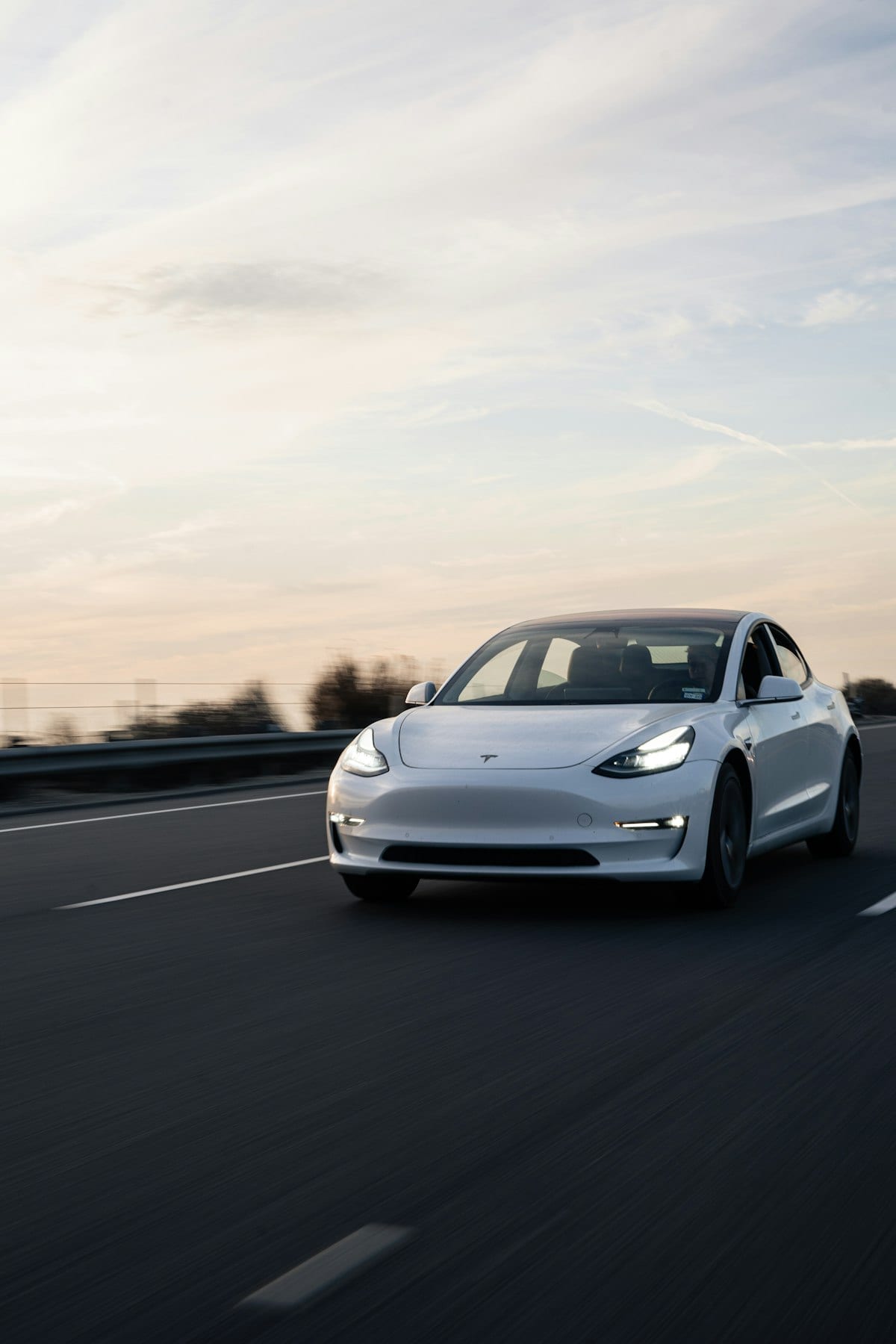
TL;DR: Carmakers now ship cars with hardware already installed, then charge the owner a recurring fee to actually use it. BMW tried to charge $18 a month in 2022 to use the heated seats the car already had [1] and backed down in 2023 after the backlash [2]. Mercedes charges $1,200 a year to unlock faster acceleration the motor can already produce [3]. Tesla ships every car with the heated seats, the battery capacity, and the Full Self-Driving hardware in place, then sells the unlock as a $99 monthly subscription, a $2,000 one-time Acceleration Boost, or a $15,000 FSD package [4]. The "feature on demand" model is not a one-off news story. It is the new normal for what you actually own when you buy a car, and it is the same business model that turns a one-time purchase into a permanent data relationship with the automaker.
BMW and the $18 Heated Seats
BMW had been telegraphing the model for two years before the heated-seat story broke. In July 2020 the company announced that its new vehicles' operating system would let owners enable functions and optional equipment "on demand and over the air," with "temporary bookings" for three years, one year, "or even shorter periods of time, like a few months" [13]. The 2020 announcement framed the approach as production flexibility: the same hardware in every car, with the unlock sold separately. In July 2022, BMW began selling subscriptions for that hardware. Owners with heated seats physically present in the cabin could pay a monthly fee to actually turn them on. The price in South Korea was ₩24,000, about $18 at the time, with annual and three-year plans available at $176 and $283, and a one-time permanent unlock for $406 [1]. Heated steering wheels ran $10 a month or $222 permanent. Apple CarPlay support was a separate $305 one-time fee. The fake engine sound package, "IconicSounds Sport," cost $138 to unlock even though BMW's own store copy admitted that "the hardware for this feature has already been installed in your vehicle during production, at no extra cost."
The Verge reported the launch on July 12, 2022, framing it bluntly: "Carmakers have always charged customers more money for high-end features, of course, but the dynamic is very different when software, rather than hardware, is the limiting factor." [5] The piece also surfaced the production-side rationale that has since become the industry talking point. Because 90 percent of all BMWs are sold with seat heaters specified, BMW wanted to install the heating elements in every car at the factory and let the few buyers who did not want the feature skip paying for it. The locked-but-present hardware approach simplified assembly. The owner paid the same either way, but the option to use it later came with a new recurring bill.
For features that connect to a service the automaker has to keep running, the subscription model is at least defensible. A live traffic camera alert feed, a satellite radio stream, a connected navigation system that pulls from a cloud service, all of those have ongoing costs. Heated seats do not. The heating element is a piece of resistive wire. It runs when you push the button. There is no server, no API, no bandwidth. BMW was charging for the right to use a piece of hardware the owner had already paid for, with no ongoing cost to the automaker.
BMW Backs Down (in Hardware, Not in Spirit)
The pushback was immediate and bipartisan. In October 2022, two New Jersey assemblymen, Paul Moriarty and Joe Danielsen, introduced a bill that would prohibit carmakers or dealers in the state from offering subscriptions for any feature using hardware already installed at the time of purchase, unless that feature represented an ongoing expense to the dealer, manufacturer, or a third party. Penalties would start at $10,000 per violation [6]. New Jersey is not a marginal venue for this fight. BMW's North American headquarters is in Woodcliff Lake, New Jersey.
BMW held the line for 14 months. Then, in September 2023, the company announced it was walking back the hardware-subscription model, at least for seats. "What we don't do any more, and that is a very well-known example, is offer seat heating by this way. It's either in or out. We offer it by the factory and you either have it or you don't have it," BMW board member Pieter Nota told Autocar in comments that were carried by Ars Technica and The Drive [2][7]. Nota framed the change as a response to consumer perception rather than a substantive concession: "We thought that we would provide an extra service to the customer by offering the chance to activate that later, but the user acceptance isn't that high. People feel that they paid double, which was actually not true, but perception is reality, I always say." [7]
BMW did not, however, give up on the model. Nota confirmed that BMW would continue "functions on demand" for software-based services such as driving assistance and parking assistance, where the "ongoing expense" carve-out the New Jersey bill was designed to recognize actually applies [2]. The heated-seat experiment is over. The subscription model itself is not. It is now migrating to features that connect to the automaker's cloud, the features where the relationship between the car and the company does not end at the sale.
Mercedes: $1,200 a Year to Make the Motor Do What It Already Does
The model works the same way at a higher price point. In November 2022, Mercedes-Benz announced an "Acceleration Increase" add-on for the EQE and EQS electric sedans, the company's flagship EVs. The add-on is a $1,200 yearly subscription that improves performance by boosting motor output by 20 to 24 percent. The hardware that delivers the additional performance is already in the car. The software that limits the motor is already in the car. The subscription unlocks what the car is physically capable of doing [3].
The Verge, which broke the U.S. coverage, framed it the way it framed the BMW case a few months earlier: "Mercedes is the latest manufacturer to lock auto features behind a subscription fee, with an upcoming 'Acceleration Increase' add-on that lets drivers pay to access motor performance their vehicle is already capable of." [3] The Mercedes version costs more than twenty times as much per year as the BMW heated seats. The structure is identical.
Mercedes has not, as of this writing, walked back the Acceleration Increase. The feature is sold as an annual or monthly subscription through Mercedes' own store. There is no public announcement of a similar reversal. The economic logic for the automaker is straightforward: a Mercedes EQS owner who has already paid $100,000-plus for the car is a buyer who has demonstrated both the willingness to spend and a high reservation price for the differentiation the extra speed provides. The $1,200 annual fee is rounding error against the cost of the car, and it converts a one-time sale into a recurring revenue line on the automaker's quarterly statement. That is the "function on demand" business case, and the reason BMW's reversal is the exception rather than the rule.
What the TU Berlin Jailbreak Tells You
In August 2023, a group of security researchers at TU Berlin announced they had developed a hardware exploit that unlocks Tesla's software-locked features, including the heated seats, Acceleration Boost, and the Full Self-Driving package, without paying Tesla for the unlock. The exploit, which requires physical access to the car, uses a voltage fault injection against the AMD Secure Processor in Tesla's infotainment system to gain a root shell on the vehicle's Linux distribution. The researchers planned to present the work at a security conference under the deliberately pointed title "Jailbreaking an Electric Vehicle in 2023 or What It Means to Hotwire Tesla's x86-Based Seat Heater" [4].
The researchers estimated the value of the locked features at up to $15,000 per car (the FSD package, at its then-current price, plus the Acceleration Boost and the heated-seat unlocks). Their writeup framed the practice from the buyer's perspective: "Tesla has been known for their advanced and well-integrated car computers, from serving mundane entertainment purposes to fully autonomous driving capabilities. More recently, Tesla has started using this well-established platform to enable in-car purchases, not only for additional connectivity features but even for analog features like faster acceleration or rear heated seats." [4]
The "Jailbreak" matters less as a hack and more as a public articulation of the structural tension. A reader commenting under the original Electrek piece distilled it in one line: "I can see having users pay for advanced software like FSD (if it actually works), but paying to turn on hardware that already exists in the car is a couple of steps too far. It's as if the car owner doesn't own his own car. Lame." [4] The TU Berlin exploit, by making the software lock technically optional, exposed the question that the "function on demand" business model is designed to avoid: if the hardware is the same, what is the owner actually buying?
What the Pattern Is
Four automakers, four years, the same shape. BMW tried it on heated seats and the backlash forced a partial reversal. Mercedes is doing it on acceleration for $1,200 a year with no public reversal in sight. Tesla has built the model into the company's product and pricing structure, with the January 2026 shift to FSD subscription-only as the latest expansion. The New Jersey bill, if it passes, would be the first U.S. state-level prohibition on the practice, but the bill's "ongoing expense" carve-out means it would only reach the most indefensible cases (heated seats, hardware already paid for) and not the ones that connect to a real ongoing service (live traffic, satellite radio, cloud-assisted driver assistance).
Three things make the model durable. First, the production economics genuinely do favor installing hardware in every unit and unlocking selectively. Second, the buyer who has already paid $50,000 to $150,000 for the car is a buyer with a high reservation price for the differentiation the unlock provides, and a $1,200 annual fee is a small percentage of the total cost of ownership. Third, the subscription relationship is also a data relationship. The owner who keeps the connected features active is the owner who keeps the cellular data link to the automaker active, which is the owner whose driving behavior, location history, and in-car activity the automaker can keep collecting. The "function on demand" model and the connected-car data economy are not two separate trends. They are the same trend, viewed from two different angles.
What "You Bought the Car" Means Now
The structural answer is in the connected-car privacy beat. The 2026 California Privacy Protection Agency enforcement sweep has now produced three settlements, against Honda, Ford, and GM, with the GM record $12.75 million penalty in May 2026 for selling OnStar driving data to LexisNexis and Verisk. The CPPA theory is straightforward: if a company collects personal information through a connected product, the CCPA's opt-out, deletion, and limitation rights apply to that product, and the company has to make those rights actually exercisable [10]. The federal layer, the 2027 DADSS mandate and the 2026 connected-car rule, is moving in the opposite direction, hardening the data pipeline rather than dismantling it [11][12].
The individual answer is more limited. There is no setting on a 2026 car that says "do not collect my biometrics, do not sell my location, do not respond to law-enforcement queries without a warrant, and turn on the hardware I already paid for." The opt-out toggles that do exist are partial, brand-specific, and easily undone by the next software update. For the subscription piece specifically, the practical question is whether the "ongoing expense" carve-out the New Jersey bill is built around will hold in court. If the carmaker can point to a server cost or a data-feed cost, the seat, the steering wheel, and the acceleration boost are all on the table.
The "function on demand" pitch to investors, and the pitch to the board, is that the car is becoming a software platform and the software platform has a recurring revenue model. The pitch to the buyer is that the car is becoming a phone on wheels. The pitch the buyer hears is that the hardware they paid for is theirs only if they keep paying. That is the model. It is not going away. The car-spying article that the rest of the site is built around documents the data side of that model. This article documents the hardware side. They are the same product, sold twice.
Sources
- Motor1.com. BMW Heated Seats Subscription Is Real And It Costs $18 Per Month (July 12, 2022)
- Ars Technica. BMW decides heated seat subscriptions are a bust (September 8, 2023)
- The Verge. Mercedes locks faster acceleration behind a $1,200 annual paywall (November 23, 2022)
- Electrek. Hackers manage to unlock Tesla software-locked features worth up to $15,000 (August 3, 2023)
- The Verge. BMW starts selling heated seat subscriptions for $18 a month (July 12, 2022)
- Ars Technica. Car feature subscriptions should be illegal, New Jersey legislators say (October 25, 2022)
- The Drive. BMW ends heated seat subscriptions because people hated them (September 8, 2023)
- Electrek. Tesla launches $2k Acceleration Boost for 3.9s 0-60 MPH in Model 3 Dual Motor (December 19, 2019)
- CNBC. Tesla moving Full Self-Driving to a monthly subscription (January 14, 2026)
- State of Surveillance. CPPA's Connected-Car Sweep Hits Honda and Ford (March 2026)
- State of Surveillance. The US Connected-Car Rule Hit Ford. Privacy Is the Cover. (June 2026)
- State of Surveillance. Your 2027 Car Will Decide If You Can Drive (March 2026)
- TechCrunch. BMW wants to sell you subscriptions to your car's features (July 1, 2020)